
How to Search the Boone Court Docket
Start with the heading on the most recent Boone court paper. A Boone address alone tells you nothing about the forum. State-law tickets filed there go to Pueblo County Court. The same goes for misdemeanors. Felonies and major civil suits go to Pueblo District Court. A Boone ordinance citation is the exception. No current Boone portal confirms its channel. So verify the named filing court and clerk with the issuing agency before you search anywhere.
- Copy the court name, case or citation number, and hearing date from the notice.
- If it names a Colorado state court, open the Judicial Branch Docket Search and choose Judicial District 10 or Pueblo County.
- Add the date and at least one more filter, such as case number, party, court type, or division.
- Match the result's date, time, hearing type, appearance mode, and courtroom with the notice.
- If it names a local Boone clerk or does not match the state search, confirm the current channel with the issuing agency rather than using Pueblo City's portal.
Need the whole story on a case? A Judicial Branch-approved ROA vendor can pull the full state case history. For a pleading, an order, or a certified copy, go straight to Pueblo Combined Court instead.
Boone Court Docket Portal Gap
Boone posts no online court docket, calendar, or payment portal that the town runs itself. That gap is real, but read it carefully. It does not mean Boone skips local ordinance enforcement. It says nothing certain about the town's municipal-court status today. A practical Boone searcher should trust the court printed on the citation. The Boone paperwork may point to a local channel. Confirm with the issuing agency before acting on it.
Do not substitute: Pueblo Municipal Court serves City of Pueblo matters. Its Today's Docket cannot confirm a Boone ordinance case.
Following this rule keeps you from a false no-result and a bad payment. Pay only after the court and case on the tool match your notice.
The Boone Municipal Court
No current Boone municipal court portal is confirmed. It is unclear whether any local Boone court counts as a court of record. So assume nothing. No Boone judge, clerk office, docket day, payment system, or citation format can be inferred from what is missing. If a Boone-issued paper names a municipal or town clerk, call that exact Boone contact. Ask where the matter was filed. Ask how a hearing date is confirmed. Ask which office supplies the court record.
Boone is an incorporated statutory town, not a wide spot in the road. Official 2020 redistricting data puts its population at 307. Incorporation alone still does not tell you which court hears a given citation. The Colorado State Demography Office municipal data backs up the town's incorporated status. It also backs up its population.
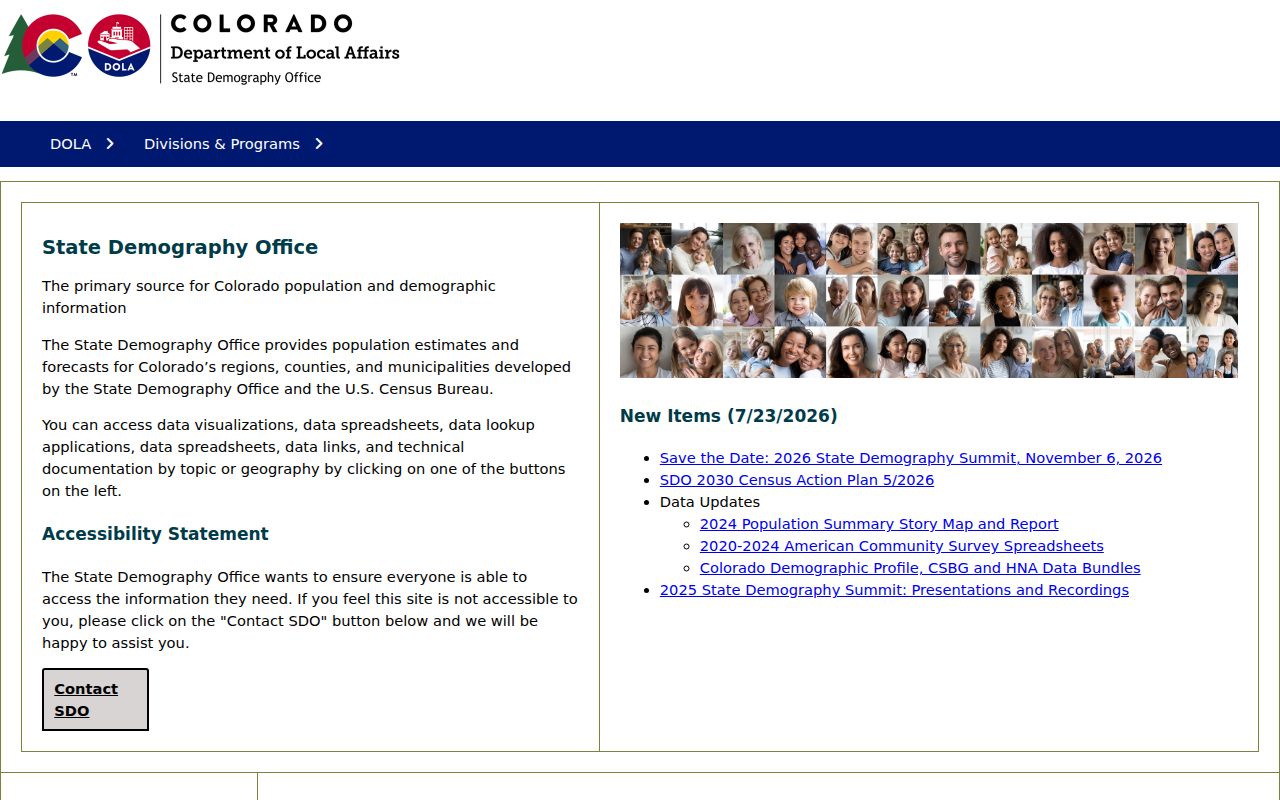
Boone appears on the official population list, which is why it counts as a municipality here. For the court search itself, though, the citation still governs.
Boone State Court Docket Search
State-law Boone cases sit under Pueblo County. Pueblo County alone makes up the 10th Judicial District. The Colorado Judicial Branch Docket Search is free. It works as a Boone hearing calendar for state cases. It is not a complete case file. You need a date plus at least one more filter. Pick Pueblo County or Judicial District 10. Then add County Court or District Court once you know the Boone case type.
A Colorado case number has three parts: a four-digit year, a case class, and a sequence number. Common classes are easy to decode. CR is for District criminal. CV is for District civil. M is the class for County misdemeanor, and T is the class for traffic. Enter the parts into the form as it asks. Your paper may show a different local numbering system. Do not force a Boone citation number into this format.
Filters can trip you up at both ends. One filter alone may return too much, while several at once can bury the match. When no event appears, recheck the date, the spelling, the case class, and the court. Only then assume the docket holds no case.
Boone Court Dates and Settings
You can confirm a Boone state-court date through the Colorado docket calendar or Pueblo Combined Court. The most recent written order beats any broad search. It speaks to your case alone. Watch for older settings too. After a continuance, they can linger in the chronological history. Compare dates and trust the newest valid notice. A virtual label covers only the Boone event where it shows up.
| Date | The day assigned by the filing court for the Boone-related case. |
|---|---|
| Time | The start time shown on the newest setting or order. |
| Courtroom | The Pueblo Combined Court division or another location named on the notice. |
| Judge | The judicial officer assigned to that specific setting. |
| Setting Type | The event label, such as setting, court trial, or plea sentencing hearing. |
Call Pueblo Combined Court at 719-404-8700 when a state setting is missing or clashes with a newer order.
Boone Court Docket Filing Levels
County Court and District Court split Boone cases along clear lines. County Court takes state misdemeanors and state traffic. It also covers civil claims up to $15,000, small claims, evictions, and protection orders. District Court handles the heavier work. That means felonies, civil matters above that limit, domestic relations, probate, juvenile, mental-health, and Water Division 2 matters. Both tracks run through Pueblo Combined Court at the Dennis Maes Pueblo Judicial Building, so every Boone court docket entry starts in the same building.
| Boone matter | State docket | Search key |
|---|---|---|
| State traffic or misdemeanor | Pueblo County Court | Pueblo plus County Court |
| Small claim or limited civil case | Pueblo County Court | Case class S or C when known |
| Felony or major civil case | Pueblo District Court | Case class CR or CV when known |
Boone has no court of its own. The town where something happened does not decide which docket hears the case. What matters is the charge itself and the court level that state law assigns to it.
Boone Traffic Tickets
Read a Boone traffic ticket before paying it. The citation tells you which court holds the case, and that detail shapes every later step. The Boone ticket may name Pueblo County Court. In that case, the state D10 payment instructions let you search by case number, by name plus date of birth, or by ticket number. The state docket can also confirm a Boone hearing date. Apply the Pueblo filters. A ticket routed through a Boone local clerk instead needs that local channel. Verify it directly. No Boone-specific online payment portal exists.
Paying is not the same as appearing. Someone who wants to contest the citation should follow the plea or appearance instructions rather than assume payment is the only option. Skipping a court date can bring added consequences that depend on the charge. A late online payment does not automatically clear a warrant either; get clerk confirmation first. The countywide breakdown lives in Pueblo County traffic court records.
Boone Court Docket Counter Access
For a Boone state case, the countywide fallback is the Pueblo Combined Court Records Department. The address is 501 N. Elizabeth Street, Pueblo, CO 81003. The window opens 8:00 a.m. to 4:00 p.m. on weekdays. A Boone record may be old, off-site, protected, or tied to a deadline. Call 719-404-8700 before traveling. Bring the Boone case number and the document title if you can.
At the counter, the clerk can provide a Register of Action, a filed order, a judgment, or a certification within access rules. Do not confuse offices here. The elected Pueblo County Clerk and Recorder is not the trial-court clerk. Its recorded-document search covers land and county records rather than a Boone criminal or civil court docket.
Name the exact state document you need. Statewide charges run $0.25 per copy page and $5 for a name search. Certified or exemplified documents cost $20 each. Research or redaction beyond the first hour costs $30 per hour. Bills run in 15-minute increments. The request page normally answers within three business days absent unusual conditions. It does not promise every Boone record arrives that fast.
Federal matters run on a separate system entirely. The U.S. District Court for Colorado PACER page describes federal access and lists the courthouses.
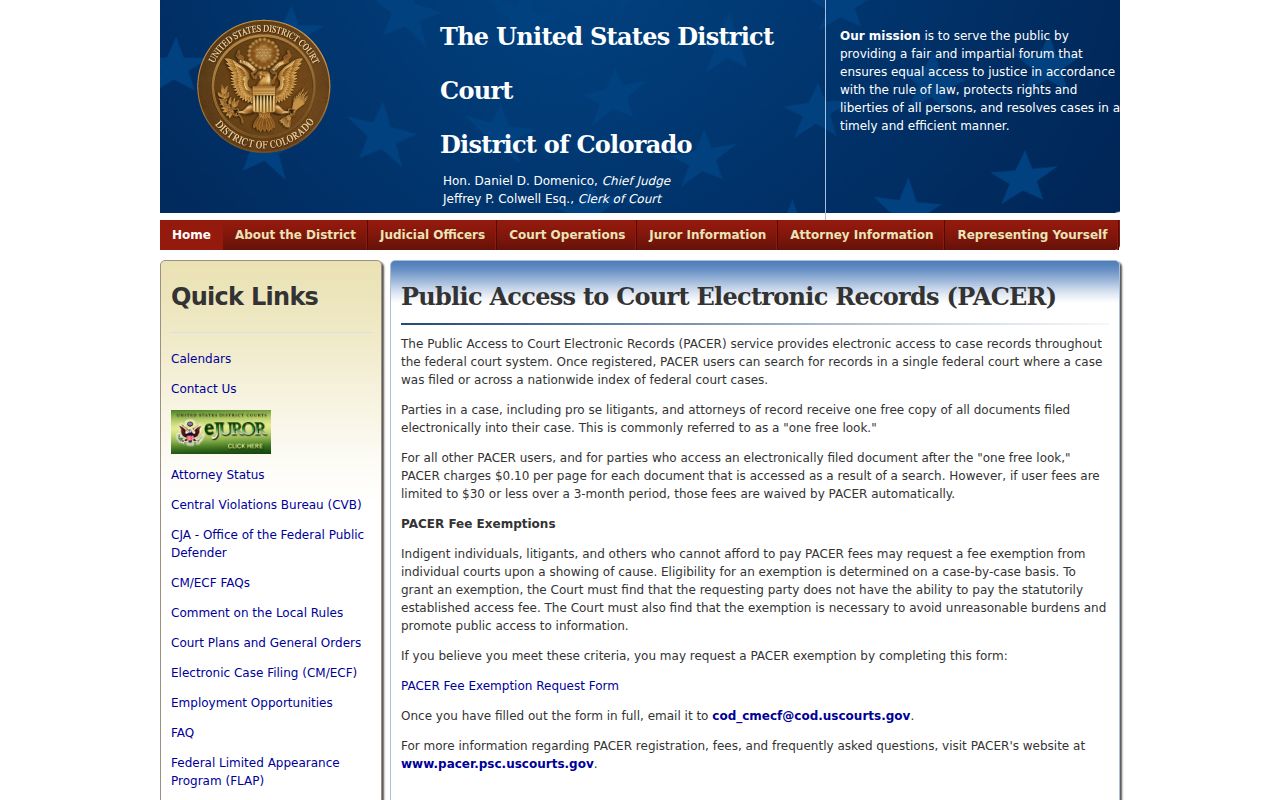
Use PACER only for a federal case tied to Boone. It never substitutes for the Pueblo County state docket.
Where Boone Cases End Up
State-law matters arising in Boone land in Pueblo County Court or Pueblo District Court. Jurisdiction decides which. The municipal side is murkier. Boone's record-court status is unclear. No municipal appeal route can be stated as a Boone fact. Colorado's general rules tell you what to expect either way. An appeal from a non-record municipal court goes to County Court within 14 days. It brings a new trial. An appeal from a qualified municipal court of record goes to District Court within 35 days. That route reviews the record. Confirm which rule fits the Boone filing before relying on either deadline.
Docket flow: Boone Municipal Court › Pueblo County Courts › District Court
That first step is conditional. It applies only when the citation confirms a Boone municipal filing; a state case starts at the appropriate Pueblo County court instead.
Boone Federal Court Docket Boundary
A federal case tied to Boone belongs to the U.S. District Court for the District of Colorado, not to Pueblo Combined Court. Public federal dockets run through CM/ECF and PACER. Entries carry numbers and can include linked documents. The state ROA model works differently, with Colorado case classes and separate clerk requests for documents. Keeping the two systems apart saves wasted searching. The District of Colorado query login is the official single-court search entry for the federal side.
A PACER result says nothing about Boone state or local cases. Search whichever system the case paper names.
Public Access to Boone Court Records
Public access turns on the filing court. It also turns on the record type. The free state search shows scheduled hearings. An approved vendor can supply a paid real-time state ROA, though Colorado calls the data "as is" and not the official record. Filed documents and certified copies for state cases come from Pueblo Combined Court. A locally filed Boone record is different. It must come from the verified local office named by the town or the citation.
Key Rules:
Chief Justice Directive 05-01 controls access to Colorado court case records and recognizes exclusions.
Colorado sealing statutes restrict public access after a qualifying record is sealed.
C.R.S. section 19-1-304 limits juvenile record access and identifying details.
A Boone court docket search may come back empty. That can mean a wrong date, wrong court, wrong case class, or an access limit. It is not proof a case never existed.
Authorized Boone parties may need photo identification for suppressed, juvenile, probate, or other protected material. A sealed case will not appear with a label explaining the restriction. Check the Boone jurisdiction split first. Then ask the state or verified local clerk what can be released. Administrative Judicial Branch records use P.A.I.R.R., while ordinary Boone court-case files follow CJD 05-01.
Boone Court Docket Appeals
Appeals create new docket entries. They sometimes create a new case number. Notices of appeal, record designation, transmission, mandate, remand, and transfer can appear along the way. They show up at different court levels. For Colorado state cases, District Court judgments generally go to the Colorado Court of Appeals. Review in the Colorado Supreme Court is discretionary after that. The U.S. Court of Appeals for the Tenth Circuit plays a different role entirely. It hears federal matters from Colorado.
Appeals from a Boone court docket do not go to the Tenth Circuit. That court handles federal appeals, not state or municipal citations out of Pueblo County. Check the docket itself to see which court issued the entry, then follow the appeal path that court provides.